


Why Do I Get Bloated Immediately After Eating?
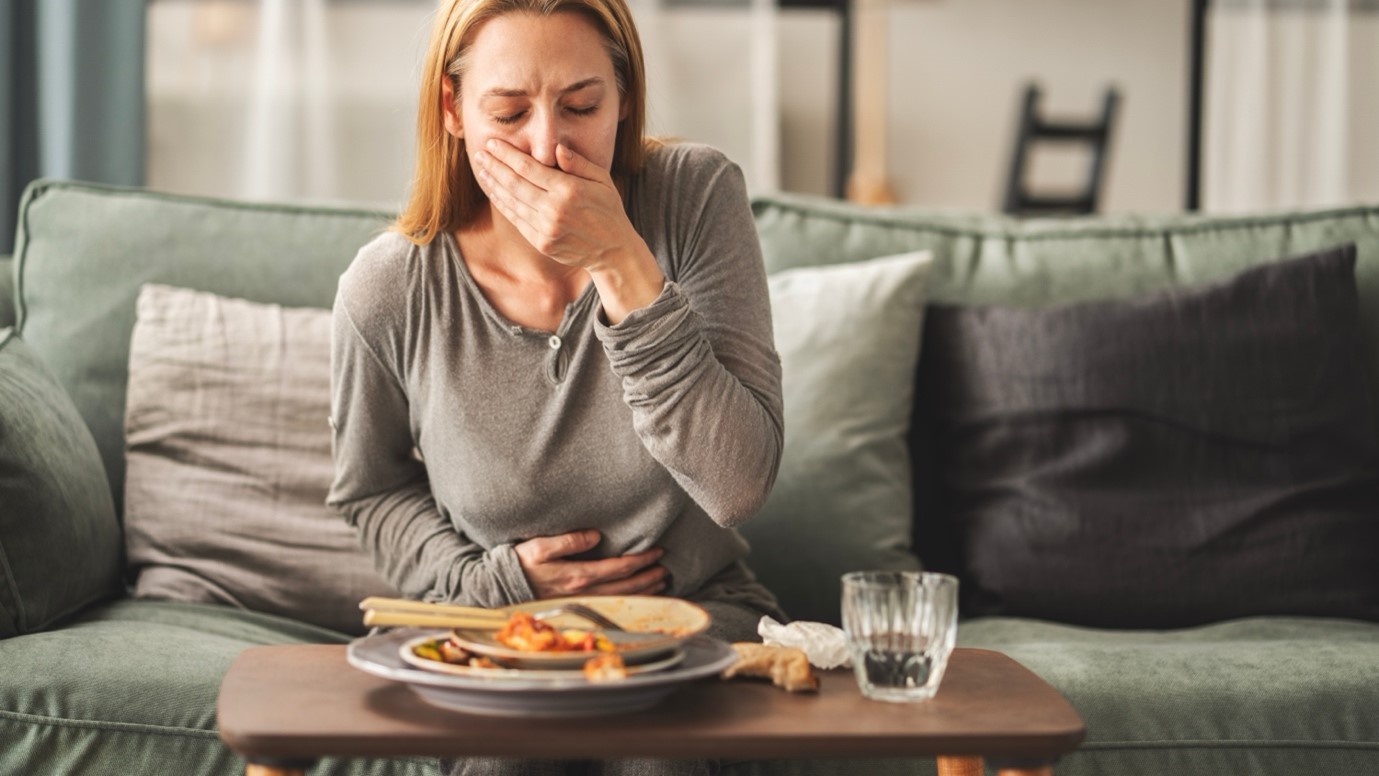

Feeling bloated straight after eating is incredibly common, but that does not make it any less uncomfortable. Whether your stomach suddenly feels tight, swollen, or “six months pregnant”, post-meal bloating can affect your confidence, your daily comfort, and even your social life.
Occasional bloating is normal. However, frequent bloating after food can be a sign that something deeper is happening in your digestive system. The positive news is that most causes are treatable once you understand what is triggering the issue.
This guide explains the most common reasons for post-meal bloating, how to reduce symptoms, and when it might be time to speak to a specialist if you feel bloated all the time.
Feeling bloated straight after meals? You are not alone
Almost everyone experiences bloating at some point. A little abdominal swelling after a big meal is normal, especially if you have eaten quickly or enjoyed something rich, salty, or fizzy.
If you feel bloated after most meals, even small ones, it may be a sign that your digestive system is struggling to break food down efficiently.
People often describe post-meal bloating as:
- A swollen or distended belly
- A tight waistband feeling
- Pressure or fullness in the upper abdomen
- Trapped wind or excessive burping
- A heavy balloon-like sensation
Occasional bloating is normal. Frequent bloating should be investigated.
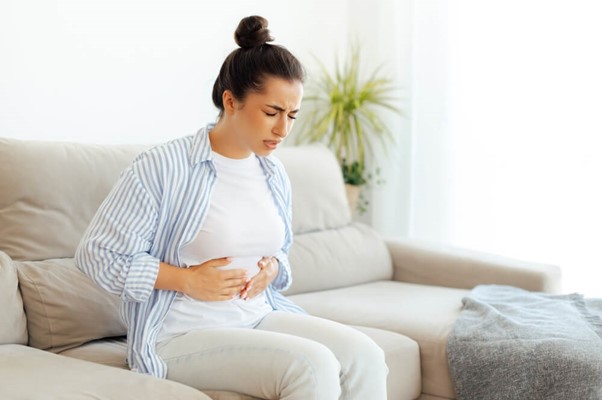
Common causes of bloating right after eating
There are many possible reasons you might feel bloated immediately after food. Some are simple eating habits and others involve your digestive system.
1. Eating too quickly or not chewing enough
Eating fast means you swallow more air, and your stomach has to work harder to break down larger pieces of food.
This increases gas production and slows digestion.
Typical signs include:
- Finishing meals quickly
- Bloating within minutes
- Frequent burping
2. Swallowing excess air (aerophagia)
This happens when air is swallowed during eating, drinking, or talking. Chewing gum and drinking fizzy drinks can make this worse.
Common triggers include:
- Drinking through straws
- Fizzy drinks
- Eating when stressed
- Talking while eating
3. Gas-producing foods
Some foods naturally create more gas during digestion. Examples include:
- Beans and lentils
- Onions and garlic
- Broccoli, cauliflower, and Brussels sprouts
- Fizzy drinks
- Artificial sweeteners
If you often eat these foods and notice bloating soon after, food breakdown may be a factor.
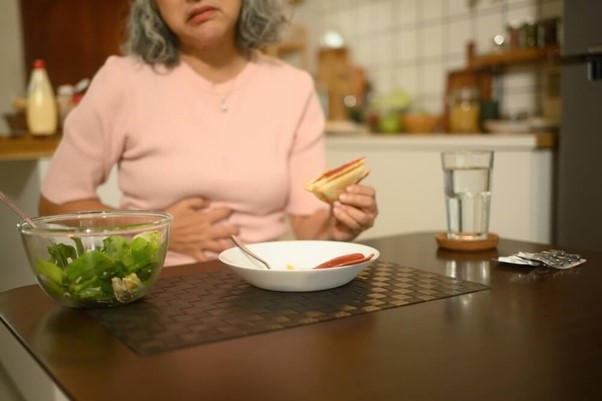
4. Dairy or gluten intolerance
Food intolerances are one of the most common causes of immediate bloating. The main culprits are:
- Lactose (milk, cheese, yoghurt)
- Gluten (bread, pasta, pastries)
- High-FODMAP foods
When the body cannot properly break down certain sugars or proteins, it can lead to gas, bloating, cramps, or loose stools.
5. Irritable Bowel Syndrome (IBS)
IBS can make the digestive tract extremely sensitive. Even normal-sized meals can trigger:
- Sudden bloating
- Cramping
- Gas
- Constipation or diarrhoea
If your bloating rises and falls throughout the day, IBS might be involved.
6. Overeating or large portions
Large meals can overwhelm the digestive system. When the stomach stretches, digestion slows and gas production increases. This can create immediate bloating.
When bloating might be linked to a gut condition
Sometimes bloating after meals is caused by an underlying digestive issue.
1. SIBO (Small Intestinal Bacterial Overgrowth)
SIBO happens when bacteria build up in the small intestine.
Common symptoms include immediate bloating, excess gas, diarrhoea or constipation, and fatigue.
Because bacteria ferment food quickly, bloating can appear minutes after eating.
2. Food sensitivities or malabsorption
Your body may not be digesting fats, sugars, or carbohydrates properly. This can cause bloating, nausea, loose stools, and discomfort after meals.
3. Gut motility issues
If food moves too slowly or too quickly through the gut, bloating often appears soon after eating.
4. Hormonal bloating
Hormonal changes, especially during the menstrual cycle, can affect digestion and make post-meal bloating more noticeable.
When should you worry about bloating after eating?
Speak to a specialist if you notice any of the following:
- Bloating alongside abdominal pain
- Unexplained weight loss
- Persistent nausea or vomiting
- Diarrhoea or constipation that keeps returning
- Blood or mucus in your stool
- Bloating that does not improve with lifestyle changes
- New bloating in someone over 40
Persistent bloating can be linked to IBS, SIBO, coeliac disease, IBD, and several other conditions that benefit from proper assessment.

How to reduce post-meal bloating
Here are simple changes that can help:
1. Eat slowly and chew your food well
Chewing more reduces swallowed air and supports better digestion.
2. Avoid known trigger foods
Watch out for common bloating triggers such as dairy, onions, garlic, wheat, fizzy drinks, and beans.
3. Try smaller meals more often
Large meals can overwhelm the digestive tract.
4. Keep a food and symptom diary
Tracking what you eat can help you spot reliable patterns and triggers.
When to get professional help
If bloating after meals is:
- Frequent
- Persistent
- Worsening over time
- Affecting daily life
- Paired with worrying symptoms
…it is wise to get checked.
Conditions such as IBS, SIBO, intolerances, and malabsorption can be managed effectively with the right diagnosis.
How Endocare can help
Here at Endocare Diagnostics, our consultants use advanced tools to pinpoint what’s happening inside your digestive system. These may include:
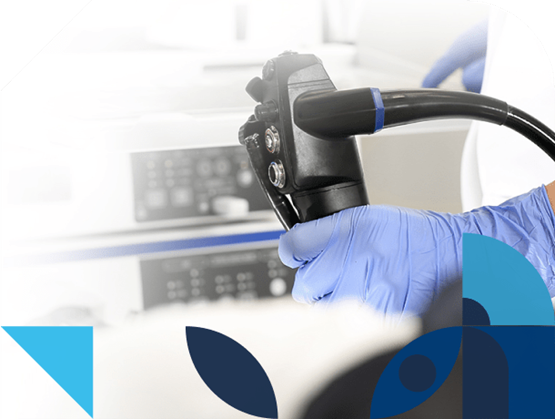
- Gastroscopy to check for inflammation or structural issues
- Endoscopy to examine all parts of the digestive system
- Food intolerance or coeliac testing
- Ultrasound or imaging scans
- Blood tests
All consultations are fast, private, and Bupa-approved.
If you regularly feel bloated after eating, our team can help identify the underlying cause and design a personalised treatment plan to help you find relief – get in touch today.
FAQ
Why do I get bloated right after I eat?
Common reasons include eating quickly, swallowing air, food intolerances, IBS, and gas-producing foods.
Is it normal to feel bloated after every meal?
Occasionally yes. Daily bloating is not considered normal and should be assessed.
Why do small meals make me bloated?
Sensitive digestion, SIBO, and food intolerances can trigger bloating even with small portions.
Can IBS cause bloating after eating?
Yes. IBS is one of the leading reasons people feel bloated after meals.
How do I stop bloating after food?
Eat slowly, avoid trigger foods, and track symptoms. If symptoms persist, seek a professional gut assessment.


